What working in the adult social support sector taught me about disability inclusion.
by Jill Spurr
Read more
Your Custom Text Here

What working in the adult social support sector taught me about disability inclusion.
by Jill Spurr
Read more
There is an uncomfortable truth about being a Head of Communications in local government that we do not discuss nearly enough. Possibly at all, at least in public.
by anonymous guest contributors
Read more
If you’re of a certain vintage you’ll remember the 1990s comedy sketch show, The Fast Show. There was a Paul Whitehouse character in it called Archie the pub bore, who claimed to have done every job under the sun, when striking up unreciprocated conversations with confused pub customers. Long distance lorry driver, vicar, boxer, pianist, ballet dancer – he’d done them all. Archie claimed each of these jobs to be the “hardest game in the world, that” “I done it myself – 30 years man and boy”. Each week his claims got more and more unbelievable. But I don’t think he ever claimed to be a comms person.
by Darren Caveney
Read more
Have you ever been in that position where someone senior says the comms team needs reviewing? I have, and it can be a worrying time. But actually it can be a very positive opportunity. And it can bring real attention and benefits to the team if done well.
by Darren Caveney
Read more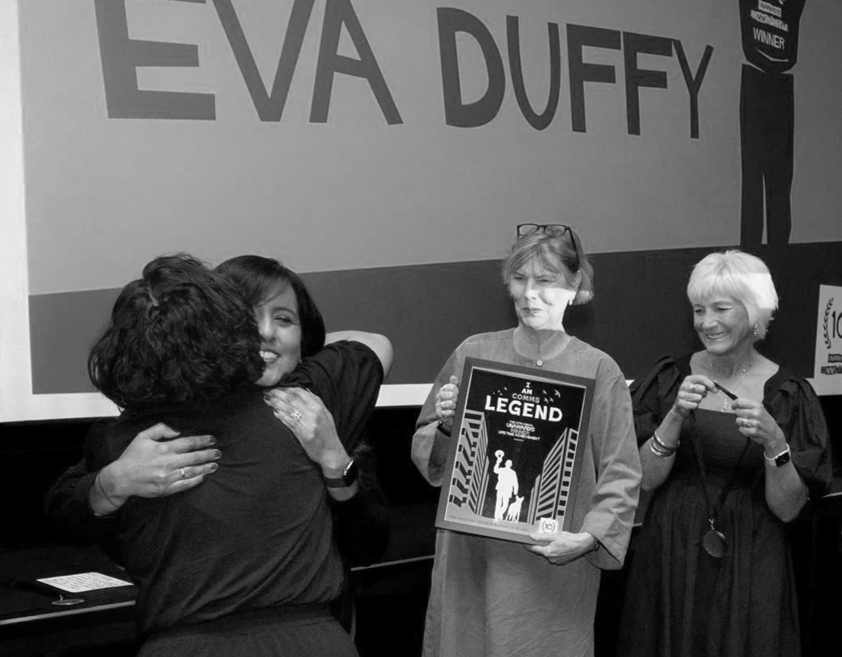
Anyone who queued for the toilets during the breaks at last month’s UnAwards Masterclass in Birmingham can testify to one thing: there are far more women than men in communications. Yet we don’t see the same representation at senior levels. There are lots of factors that play into that, but one that doesn’t get as much attention as it should is menopause.
by Eva Duffy
Read more
Elections are just round the corner, I’ve covered a few in my time - council, generals, Europeans, and PCC. The best ones for you, the comms team, and the elections team are the ones where you put some planning in first. Below are some tips for working an election – before, during and after.
by Louisa Dean
Read more
Will Mapplebeck, public affairs lead at Core Cities UK, talks about why it was time for his organisation to make a stand against racism.
by Will Mapplebeck
Read more
In April 2025, Companies House launched a communications campaign to support the rollout of identity verification under the Economic Crime and Corporate Transparency Act (ECCTA). We started with a voluntary period where company officers were able to verify ahead of the mandatory date in November. By the time the voluntary period closed, more than 1.6 million people had verified their identity – 170% above our target of 600,000.
by Anna Ellis and Esme Turner
Read more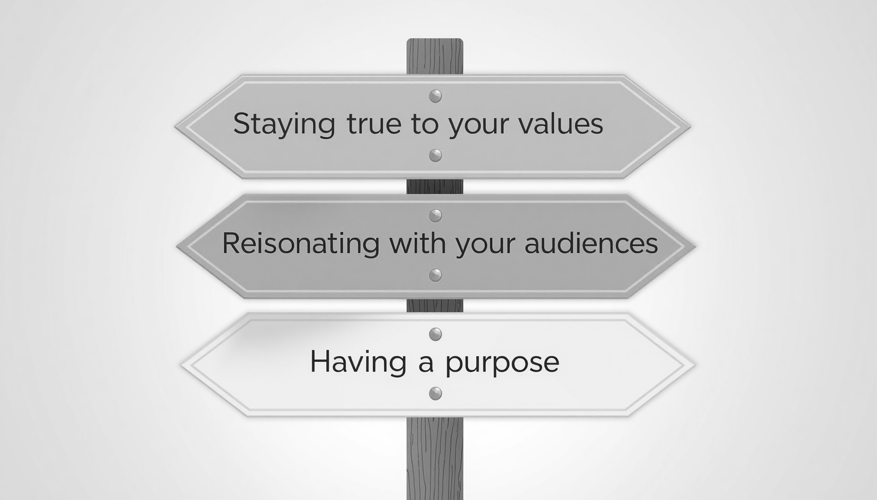
As the appetite for breaking news rages, as AI changes how we communicate and what channels we use, and in a world of instability and chaos, resonating with your audiences has never been more important.
I have been reflecting on when I delivered media training in Europe, in a different language via an interpreter, some things stuck with me.
by Dee Cowburn
Read more
It’s back - the best free learning event in the comms calendar - the UnAwards Winners Masterclass.
by Darren Caveney
Read more
More big news for you - a special UnAwards Winners Masterclass webinar has been organised for 28 April.
by Darren Caveney
Read more
The jobs market for communication professionals is tricky at the moment. If you talk to people who are recruiting, they will easily get over 100 applications for a mid-level role. If you’re in the public sector in the UK, a combination of NHS, police and local government reorganisations means job uncertainty and a possible increase in people looking for new roles.
by Liz Halliday
Read more
Ethics in comms is nothing new, and most people understand why it matters. Ethics shapes how we communicate, who we work with, and how we are perceived. But trust is the part that’s changed.
by Helena Hornby
Read more
Freelance comms pro and former Head of Comms, Anna Caig’s, debut novel, The Wise Witch of Orkney, will be published on 26 February. She offers practical advice to anyone wanting to pursue big life goals alongside a comms career.
by Anna Caig
Read more
It’s the social media story of the week, and exhibit A in standing up online for what we believe it in.
by Ben Raza
Read more
It’s back - the best free learning event in the comms calendar - the UnAwards Winners Masterclass.
Read more

Last year a lithium battery caught fire in one of our refuse trucks. Within seconds all the rubbish inside it was ablaze and the entire contents had to be emptied in the road for the fire service to put out. We posted a film of the incident on social media which went viral with a million views.
by Andreas Christophorou
Read more
Like most of the country, I’ve spent these long, dark January nights glued to The Traitors. A fan since the very first series, I usually find myself rooting for the faithfuls. But when a Head of Communications was selected as a traitor this season, I knew exactly who I was backing. (Warning - contains spoilers)
by Charlotte Parker
Read more
The feeling as we open the laptop at the start of the new year is always a little daunting. Do I know my network password? Can I remember what I was working on? How much caffeine do I need to get through till lunch?
But this year feels a little more unusual. For the first time in more than a decade, I am working outside internal communications.
by Ian Curwen
Having worked in IC, in one role or another, for such a long time, it feels like a big change.
Here are my reflections on a decade focused on meeting our employee’s communications needs.
The importance of IC
As you can imagine, I am a passionate advocate for both the power and importance of internal communication. I think it’s the place where you earn your stripes. It’s the place where problem solving, creative thinking and the bullsh*t detector are the tools of the trade.
Your employees are your most important audience. And they’re the toughest to satisfy. It’s more difficult to engage an internal audience than it is the outside world.
If you’ve delivered a successful internal comms plan, then you can do anything.
The twelve years have been nothing if not diverse. While 2014 already feels a long time ago, when you recount some of the internal communications challenges we’ve wrestled with since then, it’s striking.
They include:
· Changes to our ownership
· Changes to our mission
· The Covid pandemic
· The increase in agile working
· Technological modernisation
· Travel and site access changes
That’s before you consider countless restructures and office moves that have accompanied the above. These shape people’s lives and experiences just as much as any of the above.
While working in internal communication, I’ve kept a few principles in mind. We never get everything right, but if you keep these in mind, you won’t be too far wrong.
Think clarity
The best internal communications are those which are easiest to understand. It really is that simple.
Don’t assume people will understand what you’re saying – make sure they do.
People have very little time to consume your communications (the IOIC say it’s 15 minutes a day, at the most) and the cost is significant (each minute costs about 95p per person).
Think people
The most successful change communications are those which are focused on the impact on people.
Again, this feels like it should be common sense, but it’s easy to forget.
People are an organisation’s greatest asset. Start by thinking of them and that they need from what you’re communicating.
When people are going through change, they are thinking about how it’ll impact them:
· If there is a restructure, who will their new manager be? Will they have to work differently?
· If they’re moving offices, will they be able to get a parking space? Will they have time to drop the children off before the commute?
Think ‘so what’
When people contact me about some communications they’d like produced, the key question is always, ‘so what?’
It’s not glib, it’s just the best way of getting to the heart of the issue – why you are communicating.
We’ve got to make sure people understand what they’re reading/watching/listening to, and what we want them to do as a result.
If you can’t answer the ‘so what?’ question, then the audience has got no chance.
And if you’re answer is that you want to raise awareness, be prepared for my next question to be, ‘why?’
So, what’s next?
My new role is as interim head of corporate communications. This team has both an internal and external lens – covering brand, external communications channels, digital and communications materials.
As the team is responsible for so much of what the external world sees of Sellafield, they work hard to ensure our communications are both creative and clear.
Much of what I’ve learned in internal communications will serve me well here. After all the basics of simplicity, clarity and audience focus apply just as much here.
But I also need to quickly get up to speed with what our external audiences want from our channels.
It’s a challenge, but one I’m excited for.
Ian Curwen is interim head of communications in the nuclear industry
The feeling as we open the laptop at the start of the new year is always a little daunting. Do I know my network password? Can I remember what I was working on? How much caffeine do I need to get through till lunch?
But this year feels a little more unusual. For the first time in more than a decade, I am working outside internal communications.
by Ian Curwen
Read more
